From mailbox to garden
a story of two wool carder bees
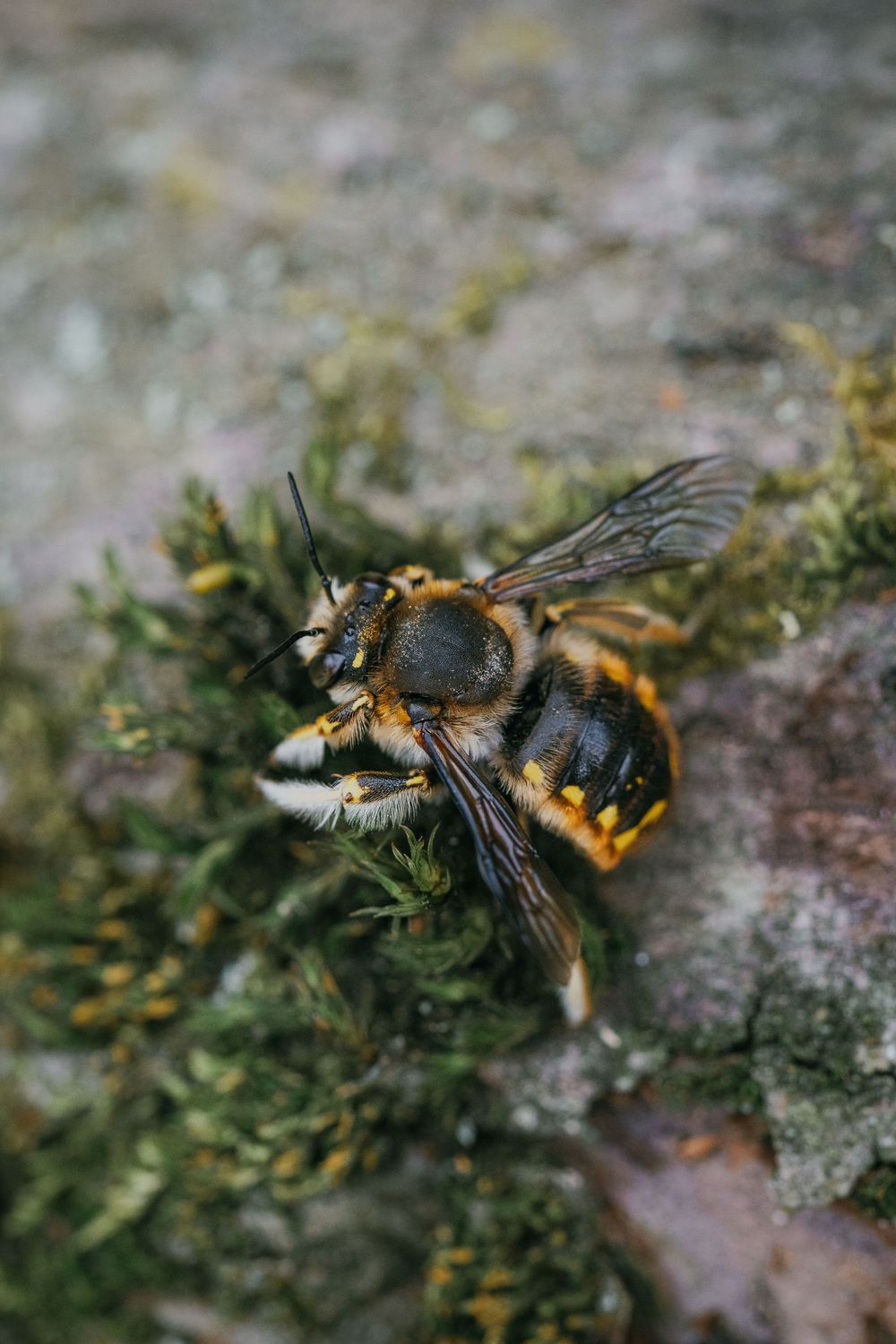
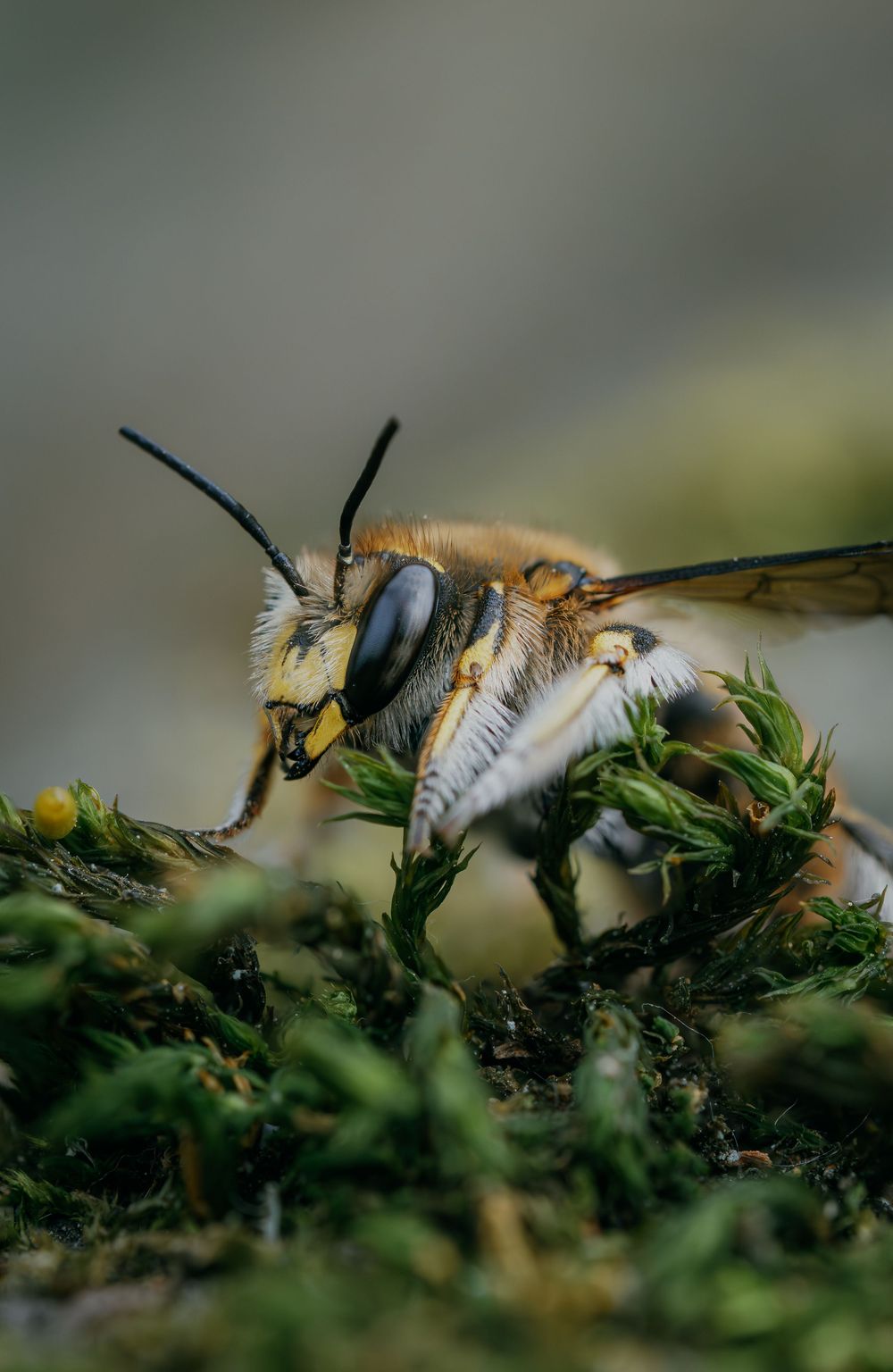
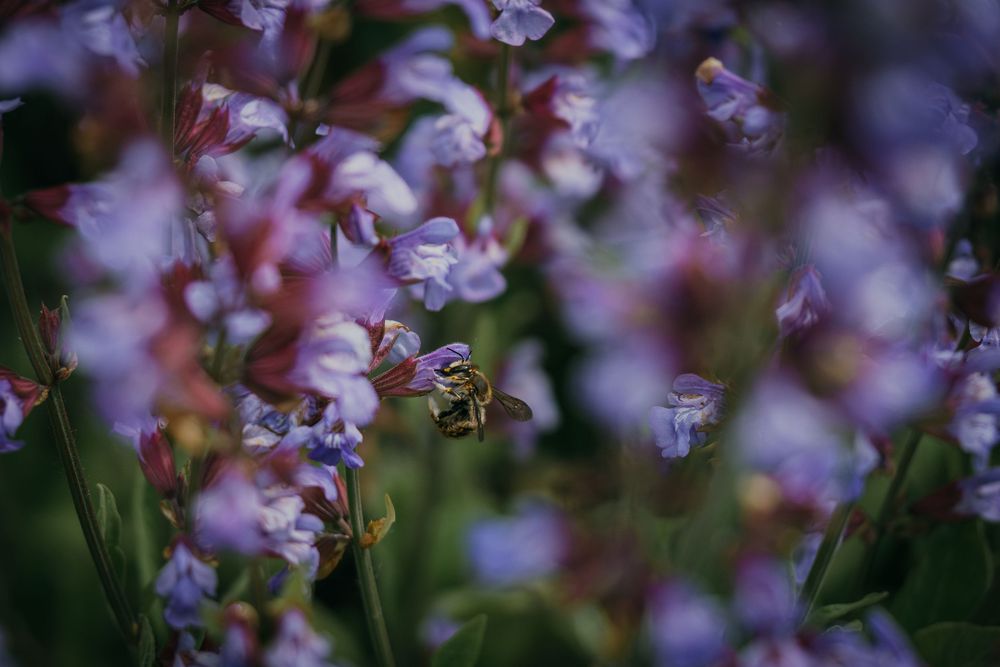
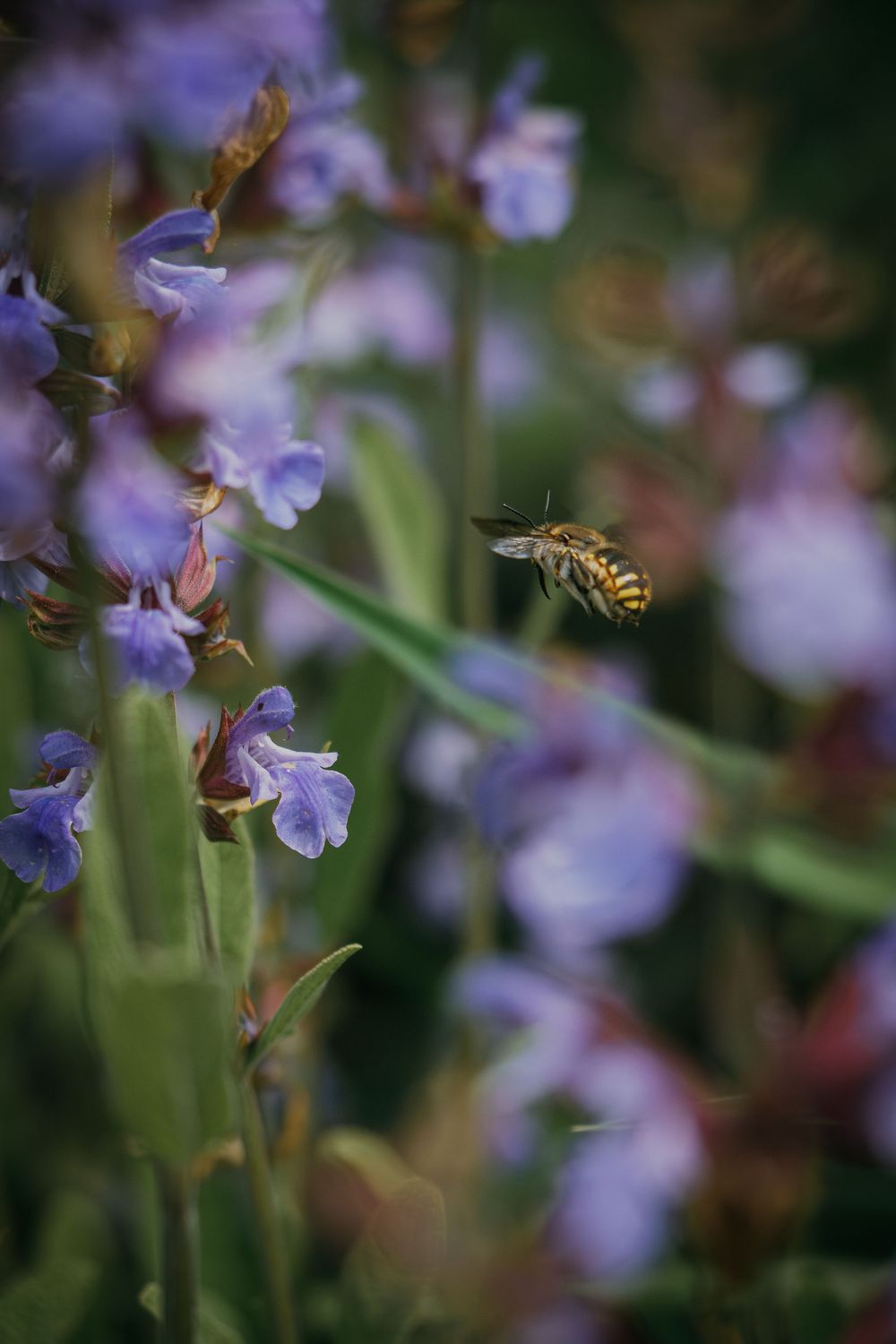
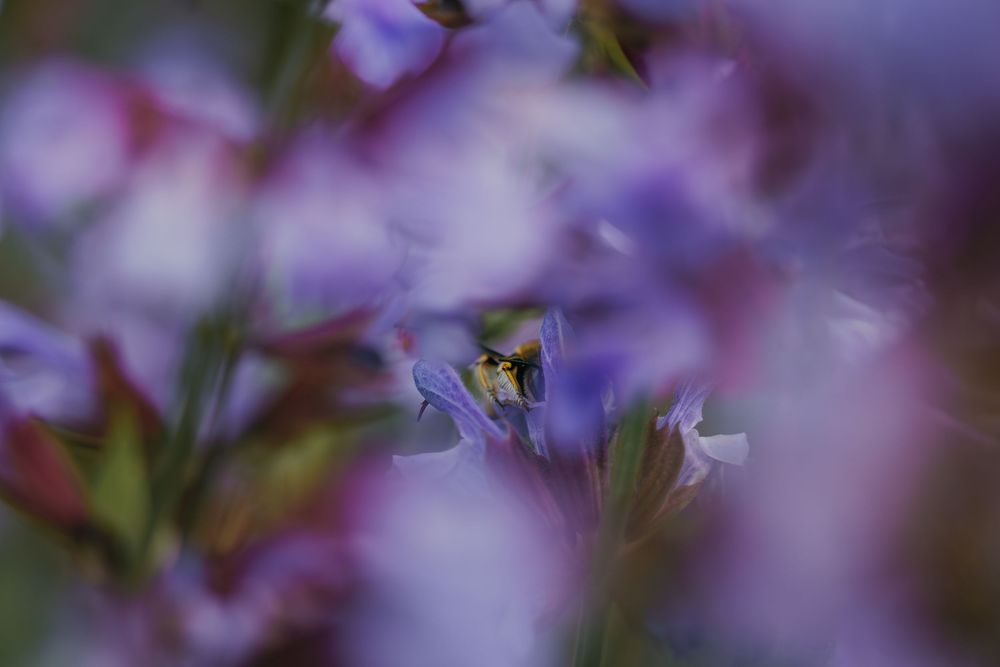
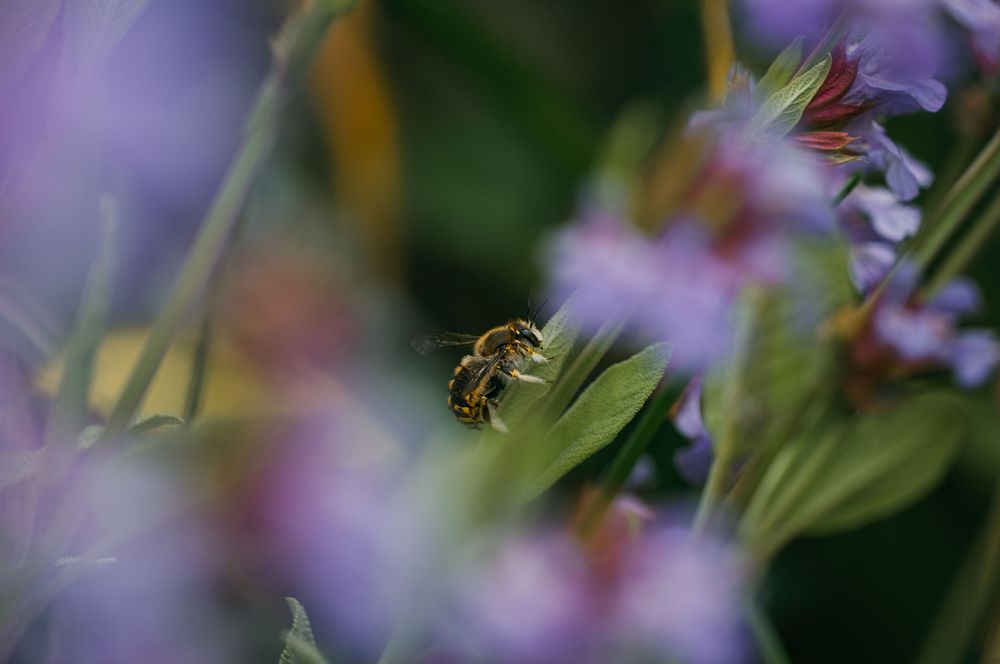
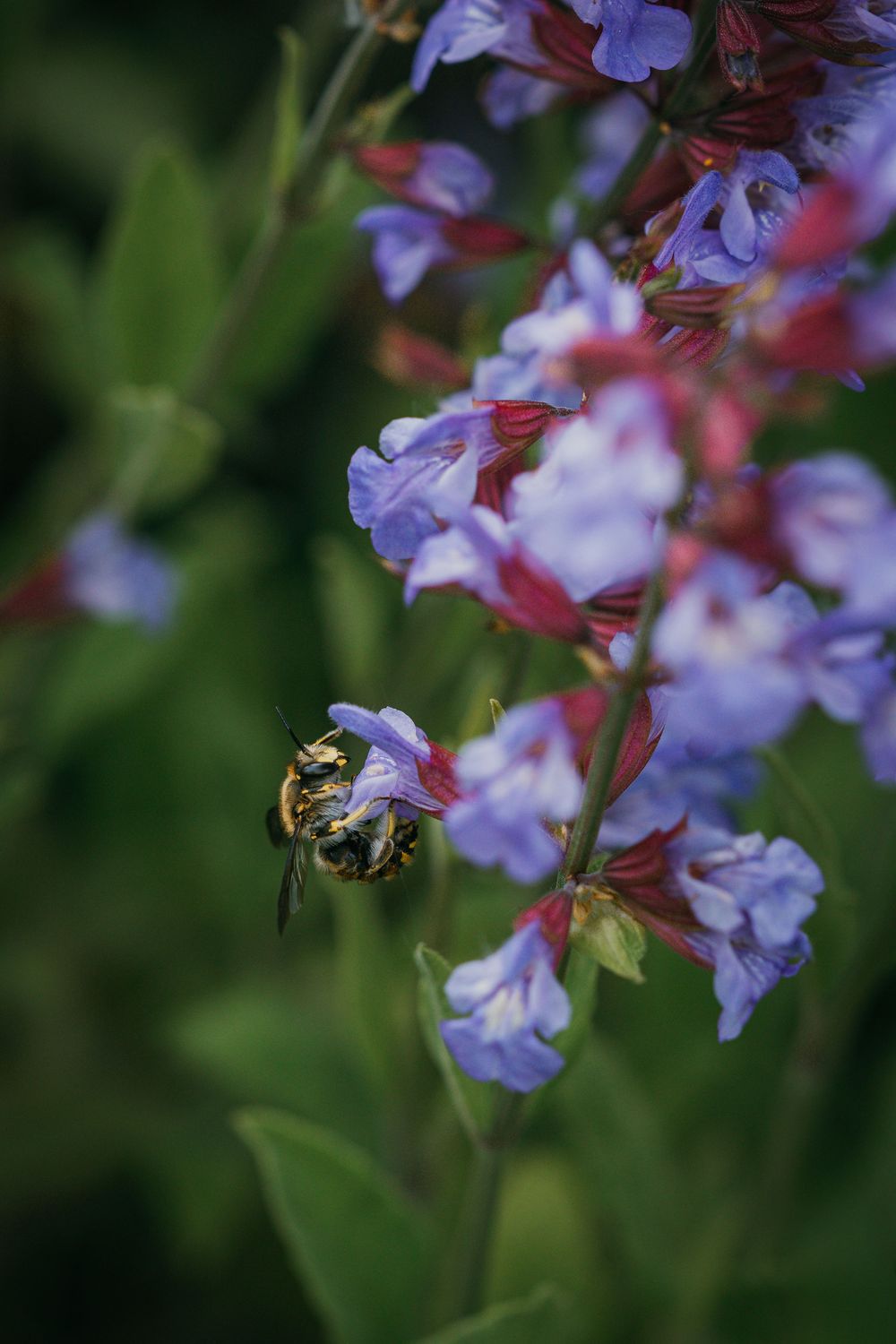
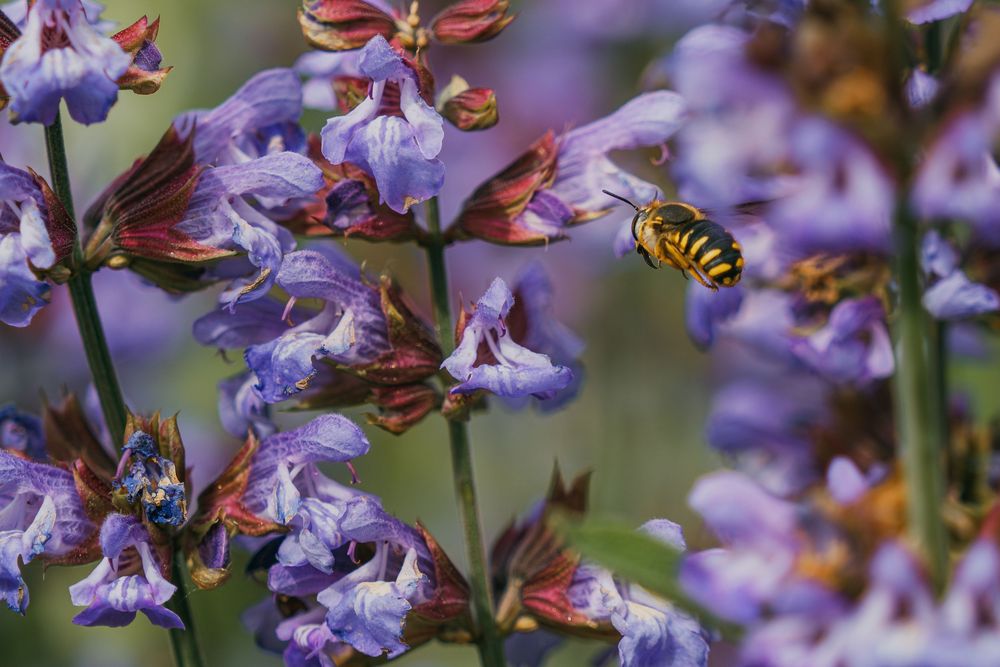
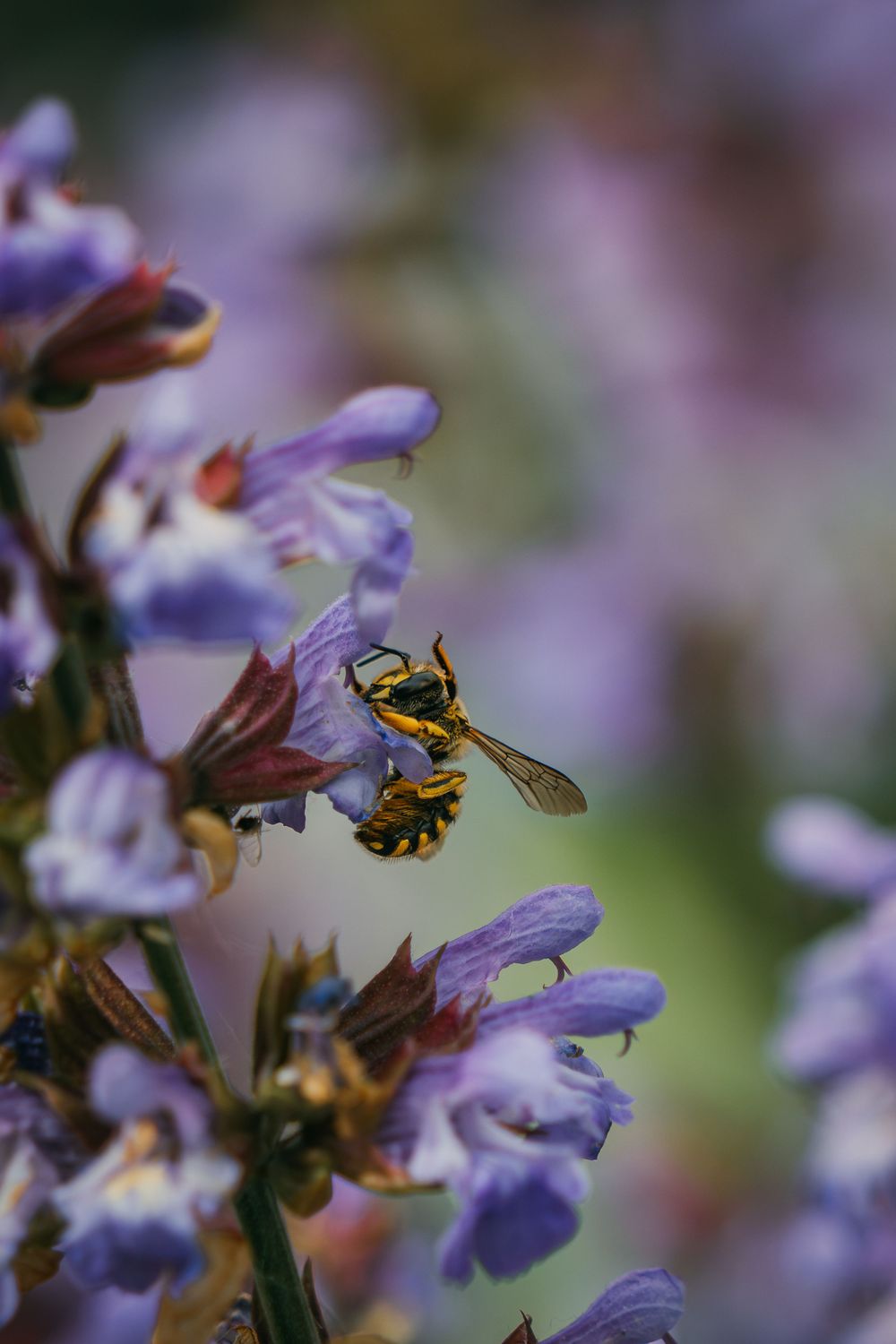
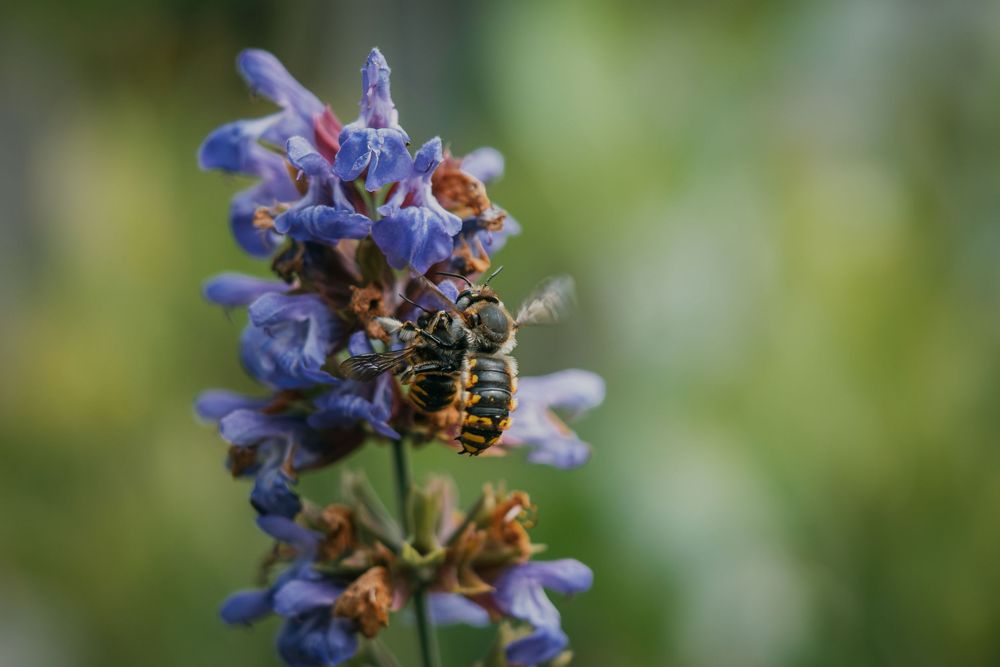
As I went to check the mail one day, I found a lone wool carder bee. Me and my partner gently got it out and placed it on a log with damp moss. It stayed there for a little while and I was able to capture this image. A few days later however, I found it hovering around my sage in the garden. Over the following week it returned daily, and after a few days I noticed a female wool carder bee had been attracted as well. I was able to document their life as they collected nectar and mated.
These are solitary bees with a preference for blue and purple flowers. Which is likely why it kept returning to my Sage. The other reason is that they need plants that have "fuzz" or hairs on their leaves. Like Sage, Lambs-ear or Pearly Everlasting. This is what has given the bees their name. The female will collect the hairs that she cards into balls that she uses to line the nest as insulation for her larvae. She's smaller than the male, around 11 to 12 mm long while he is around 18mm long. The male does not have a stinger, but is very aggressive in protecting his territory and partner. He has four spikes at the tip of his abdomen, and some smaller ones underneath. If a bumblebee or any other insect gets to close to the flowers, he attacks. He flies in, front legs stretched forward, and body slams the other insect with his whole body. Even if they are twice, or even thrice, his size. He will wrestle them until they fall off the flowers, and sometimes fly after them as they flee the scene, chasing them away. He does this to save the best flowers for the females to eat.
As a nature photographer and communicator, my work aims to inspire and educate around biodiversity, nature care and sustainability. I am also working hard to turn my land into a haven of biodiversity for a variety of birds and insects. If you want to support my work, an easy way is by simply treating me to a cup of coffee.
Wool Carder Bees, Anthidium manicatum